Competitive Landscape of Advanced Packaging: The Coopetition Between OSATs and Foundries
Advanced packaging has moved from the back end of semiconductor manufacturing to the center of the industry’s strategic map. As AI, high-performance computing, mobile systems, automotive electronics, and chiplets all push toward heterogeneous integration, one question has become unavoidable: who owns the packaging layer of the future, OSATs or foundries? The answer is not a clean winner-takes-all outcome. It is a complex and evolving contest of overlap, specialization, and cooperation. In other words, it is cooptition.
The word may sound awkward, but it fits the moment perfectly. Outsourced semiconductor assembly and test providers, or OSATs, are moving deeper into advanced encapsulation, fan-out, 2.5D, and 3D integration. Foundries, meanwhile, are extending their reach beyond wafers into packaging platforms that connect logic, memory, and chiplets into complete systems. Each side needs the other in some places, competes directly in others, and constantly recalibrates its position as demand changes. That tension is shaping the future of heterogeneous integration.
Why Advanced Packaging Became Strategic
The competitive landscape only makes sense if you understand why packaging suddenly matters so much. For decades, the most important battles in semiconductors were fought in lithography, device scaling, and wafer yield. Packaging was often seen as a lower-value step that simply protected and connected the finished die. That perception no longer holds.
Today’s most advanced chips depend on package-level integration to reach their performance goals. Large AI accelerators need multiple HBM stacks arranged with extremely short interconnects. Chiplet-based CPUs and SoCs need dense, low-latency die-to-die communication. Mobile and automotive modules need more functionality in less space. All of that pushes packaging into the role of architectural enabler.
Because advanced packaging now determines bandwidth, thermal behavior, cost, and supply availability, both OSATs and foundries have a strong incentive to move deeper into it. The packaging layer is no longer just supporting the chip. It is part of the chip’s value proposition.
OSATs: Flexibility, Breadth, and Integration Experience
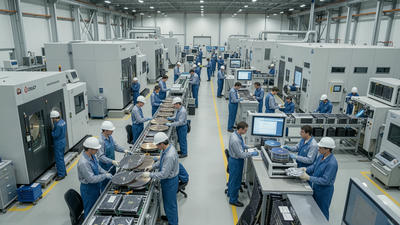
OSATs have long been the specialists of the back end. Their traditional strengths are breadth of customer base, manufacturing flexibility, and deep experience in assembly and test. Those strengths matter even more in advanced packaging, because heterogeneous integration is rarely a one-size-fits-all business.
OSATs typically serve many customers across many product categories, which gives them a broad view of packaging needs. They are often well positioned to support:
- Fan-out wafer-level packaging for mobile and consumer devices.
- System-in-package assemblies for RF, power, and sensor modules.
- Advanced test flows that verify complex multi-die systems.
- Custom integration projects where a customer needs several dies from different sources assembled into one package.
That flexibility is a major asset in heterogeneous integration. A chip designer may want one die from a leading foundry, another from a specialty memory vendor, and a third from an analog or RF supplier. OSATs are naturally suited to bring those parts together. They are the integrators who can mix and match, then test and qualify the result.
They also have another advantage: they are not always tied to a single foundry’s roadmap. That makes them attractive to customers who want a more neutral packaging partner or who need to avoid becoming locked into one foundry ecosystem. In a market where supply chain resilience matters, neutrality has value.
Foundries: Scale, Tighter Co-Design, and Platform Control
Foundries entered advanced packaging from a different direction. Their traditional strength is process control and scale at the wafer level. As the industry shifted toward chiplets, AI accelerators, and 2.5D/3D integration, foundries realized that controlling packaging could help them control more of the overall solution. That means more value capture, tighter co-design, and stronger customer stickiness.
Foundry-led advanced packaging offers several advantages:
- Close coupling between wafer fabrication and packaging design.
- Ability to optimize logic, interconnect, and package together.
- Access to leading-edge nodes that often define the most demanding package architectures.
- Large-scale infrastructure that can support high-volume AI and HPC demand.
This integration is especially powerful in AI. A leading AI accelerator may need a bleeding-edge compute die, multiple HBM stacks, and an interposer or other advanced integration layer. If the foundry controls both the wafer and the packaging path, it can offer a more seamless platform and better coordinate capacity. Customers love that when they can get it, because it simplifies the supply chain and reduces design friction.
But foundries also face challenges. They must balance their packaging ambitions with their core wafer business, and they often need to prove they can support third-party customers at scale without disadvantaging their own captive products. That balancing act is at the heart of their competitive position.
The Core of the Cooptition
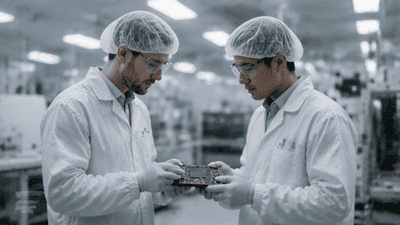
The relationship between OSATs and foundries is not pure rivalry. It is cooptition because they often compete in some layers of packaging while depending on one another in others. A foundry may provide advanced packaging for a flagship AI product while outsourcing other assembly or test functions to an OSAT. An OSAT may work on a customer’s system package while relying on a foundry for wafers or interposers. The lines are blurry, and that is exactly why the competition is so interesting.
The cooptition dynamic has several dimensions:
- Technology overlap. Both sides are investing in 2.5D, 3D, fan-out, and chiplet-ready packaging.
- Customer overlap. The same AI, networking, mobile, and automotive customers may source from both foundries and OSATs.
- Capacity overlap. When one side is constrained, business spills to the other.
- Ecosystem dependence. Neither side can fully replace the other across all applications and volumes.
That means the competitive landscape is less about total conquest and more about strategic positioning. Each side is trying to own the parts of the value chain where it has the best leverage.
Where Foundries Have the Edge
Foundries tend to have the upper hand in the highest-end, most tightly coupled advanced packaging flows. This is especially true where the package is deeply tied to the wafer process and where customers want a single platform provider for both logic and packaging. Examples include large AI accelerators, advanced CPUs, and tightly integrated chiplet modules.
Their edge comes from a few sources:
- They already run the most advanced wafer fabs, which makes process integration easier.
- They can align packaging capacity with logic wafer capacity and customer roadmaps.
- They often own critical enabling technologies such as silicon interposers or advanced 3D bonding flows.
For customers trying to launch a flagship product on the latest node, that can be decisive. The foundry’s ability to co-design the die and the package can reduce risk and shorten time to market. When that matters most, foundries can be very hard to dislodge.
Where OSATs Remain Strong
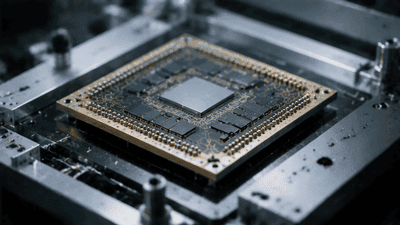
OSATs, however, still hold important ground. They often win where customer diversity, packaging variety, and integration flexibility matter more than deep wafer-package co-design. That includes many mobile, automotive, consumer, and networking products. It also includes situations where customers want to combine dies from different sources or where the package architecture is not tied to a single foundry platform.
OSATs are also strong in high-mix environments. They may be more nimble when a customer wants a special system-in-package or an unusual mix of dies and passives. Their business model is built around serving many customers and adapting to many package types. That gives them resilience and broad market coverage.
Just as important, OSATs have decades of experience in test, assembly, and yield management. In advanced packaging, that experience can be a major advantage because the failure modes are more complex. A great package is not just technically elegant; it is manufacturable, testable, and reliable at scale. OSATs are very good at that kind of operational discipline.
AI Is Rewriting the Rules
The AI boom has made the competition more intense. AI accelerators require large packages, huge memory bandwidth, and very high assembly value per unit. That creates a bigger prize for whoever can dominate the packaging stage. It also rewards those who can ramp capacity quickly and maintain yield.
In this environment, foundries benefit from the fact that many AI packages depend on their leading-edge wafers and interposer ecosystems. But OSATs benefit too, because the sheer volume of demand means no single provider can do everything. When foundry packaging lines are full, customers look elsewhere. That opens the door for OSATs to capture overflow, secondary builds, or even primary business in certain segments.
AI also accelerates process learning. When a packaging platform becomes hot, both sides pour resources into tool upgrades, process refinement, and capacity expansion. The result is faster innovation and sharper competition. In that sense, AI is not just increasing demand. It is forcing the whole advanced packaging sector to evolve more quickly.
Different Business Models, Different Risks
The OSAT and foundry models are not just different in capability. They are different in economics. Foundries are typically capital-intensive, deeply integrated, and optimized around a few high-volume platforms. OSATs are broader, more service-oriented, and often more exposed to product mix changes. That means each side has different risks in the advanced packaging race.
Foundries risk overcommitting to captive packaging solutions that may be difficult to generalize across the market. If they focus too much on one class of AI customer or one packaging platform, they may struggle to serve broader heterogeneous integration needs. OSATs, by contrast, risk being squeezed if customers increasingly prefer integrated foundry-to-package platforms that reduce handoffs and simplify supply chains.
This tension makes the landscape dynamic. A technology shift that favors co-design and platform integration may strengthen foundries. A shift that favors modularity, mix-and-match integration, or customer diversity may strengthen OSATs. The market is big enough for both, but not in equal ways across every segment.
How Heterogeneous Integration Changes the Game
Heterogeneous integration is the common battlefield where this cooptition plays out. It changes the question from “who can package a chip?” to “who can assemble a system?” That is a much bigger challenge. The system may include compute chiplets, HBM, RF, power management, optics, or sensors. It may need 2.5D interposers, 3D bonding, fan-out routing, or all of the above.
Foundries usually have the advantage when the system is tightly bound to leading-edge logic and memory bandwidth. OSATs often have the advantage when the system is broader, more varied, or more customized. The more the package looks like a mini-system with many independent parts, the more OSATs can leverage their breadth. The more the package looks like a high-performance logic platform tightly linked to wafer technology, the more foundries can leverage their integration depth.
So the future likely belongs not to one side or the other, but to whichever side can best match the heterogeneity of the package to the strengths of its model.
Capacity and Geography Matter Too
This competition is also shaped by geography. Advanced packaging capacity is concentrated in a few regions, and governments have become much more aware of its strategic value. That has led to domestic investment, supply chain localization efforts, and a stronger push for resilient advanced packaging ecosystems.
For foundries, geographic concentration can be a strength because it allows them to tightly coordinate front-end and back-end operations. For OSATs, geographic diversity can be an advantage because they can serve multiple customers and regions without tying the entire ecosystem to one location. In practice, customers are increasingly thinking about geopolitical risk alongside technical fit and price.
That means the next phase of competition will not just be about technology. It will also be about who can build trusted, geographically resilient packaging capacity.
What Customers Actually Want
From a customer’s perspective, the best provider is the one that solves the problem with the least friction. Sometimes that means a foundry with integrated logic and packaging services. Sometimes it means an OSAT that can combine chips from several suppliers into one package. The choice depends on the product.
Customers generally want:
- Fast time to market.
- High yield and reliability.
- Enough packaging capacity to support volume ramps.
- Flexibility in design and sourcing.
- Predictable cost and supply chain stability.
The provider that can best balance those five goals tends to win the work. That is why cooptition is such a useful lens. It is not about abstract market share alone; it is about who can fit the customer’s product reality at a given moment.
The Next Few Years
Looking ahead, the competitive landscape is likely to stay fluid. Foundries will keep expanding advanced packaging as part of their platform strategy. OSATs will keep investing in advanced encapsulation, fan-out, and heterogeneous integration to defend and grow their relevance. In some segments, the boundary will blur even more.
We can expect more:
- Platform-based packaging offerings from foundries.
- Highly customized heterogeneous integration services from OSATs.
- Shared ecosystems where wafers, interposers, substrates, and test are spread across both types of providers.
The industry is unlikely to settle into a clean separation. Instead, it will continue to evolve into a layered ecosystem where the best provider depends on the technology, the volume, and the customer’s architecture.
Conclusion
The competitive landscape of advanced packaging is best understood as a cooptition between OSATs and foundries. Foundries bring integration depth, wafer-package co-design, and platform control. OSATs bring flexibility, breadth, and strong assembly and test capabilities. In a world shaped by heterogeneous integration, both are essential, and both are trying to claim the most valuable layers of the stack.
This is not a simple turf war. It is a redefinition of who owns the system-level value in semiconductors. As advanced packaging becomes more critical to AI, chiplets, mobile, and automotive systems, the competition will intensify—but so will cooperation. The winners will be the companies that can move across the boundary between fabrication and packaging without losing sight of the customer’s real goal: a reliable, high-performance, manufacturable system.